

Deciding when to switch to winter tires is one of those seasonal questions that most of us answer by instinct, whether that’s the first frost, the first snowfall, or a date we’ve settled on over the years. It’s a reasonable way to go about it, but there’s also a more precise guide that many drivers find helpful: the 7 degree rule for winter tires. Once you understand what it’s based on, choosing the right weekend for your swap tends to feel a lot more straightforward.
The 7 Degree Rule for Winter Tires, Explained
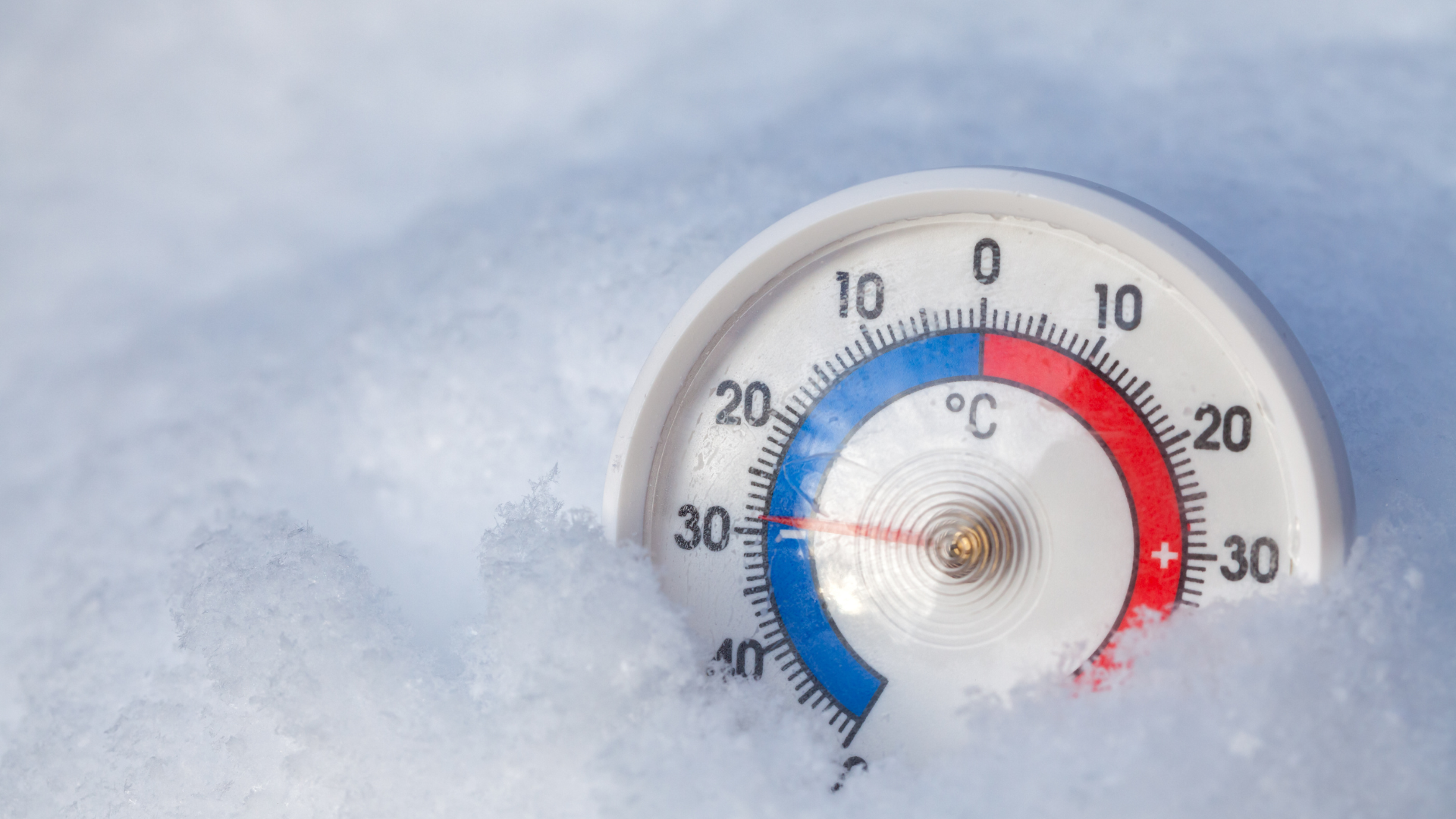
The 7°C rule comes down to how tires perform in colder temperatures. As daily temperatures consistently drop to 7°C or below, winter tires generally begin to outperform all-season tires. This is true even when there’s no snow on the ground, as colder temperatures affect how tires behave on the road. It’s an important distinction to keep in mind, especially since temperatures often fall below 7°C well before the first snowfall arrives.
What Happens to Your Tires Below 7°C
A tire’s performance depends a great deal on the rubber it’s made from. All-season tires use a firmer compound that’s designed to handle a wide range of conditions, and as temperatures approach 7°C that compound gradually begins to stiffen. A stiffer tire doesn’t grip the road quite as well, even on dry pavement, which can affect braking, cornering, and acceleration in ways you might not notice until you need them.
Winter tires are made with a softer compound that stays flexible in the cold, which lets the tire keep conforming to the road surface as the temperature falls. The tread pattern plays its part too, though the rubber does much of the work. If you’d like to see the two tire types compared side by side, our guide to the differences between them goes into more detail.
Why the Thermometer Beats the Calendar
Winter tire laws are a good reminder of how much the timing varies across the country. Quebec requires winter tires from December 1 to March 15, and British Columbia requires winter tires or chains on most designated highways from October 1 to April 30. Those dates set a legal deadline, though many drivers find the ideal time to swap comes a little earlier, since temperatures in much of Canada dip below 7°C well before December. If you’d like to see what applies in your province, our province-by-province overview covers the requirements in more detail.
Likewise, many of us wait for the first snowfall as a natural cue, and it makes sense that we would. The only catch is that the cold has usually been affecting all-season tires for a few weeks by the time the snow shows up, so watching the forecast for temperatures can give you a bit of extra lead time.
How to Track the Temperature Without Overthinking It
Following the 7 degree rule for winter tires doesn’t take much effort, and a few simple habits can make it feel natural:
- Check both the daily highs and the overnight lows in your weather app, since mornings are often the coldest part of the day
- Watch for a stretch of about a week where the highs hover around 7°C, which is a good sign that the season is turning
- Keep in mind that shaded roads and bridges tend to be colder than the air temperature suggests
Once you notice the weather is consistently around 7°C, choose a dry weekend so you can take your time with the swap.
A Helpful Pre-Swap Checklist for Winter Tires
Before your winter set goes on, it’s worth taking a few minutes to look over a handful of things:
- Tire pressure: make sure your winter tires are properly inflated before installing them
- Tread and sidewalls: check for uneven wear, cracks, bulges, or any other visible damage
- Wheel markings: if your tires are directional or have a specific rotation pattern, confirm that each wheel goes back on the correct corner
- Hub faces: clear away any dirt and rust from the wheel hub before mounting
Making the Swap a Driveway Job
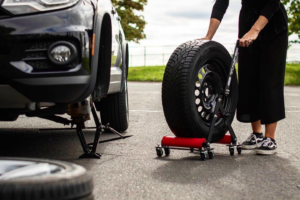
Once you’ve picked your weekend, the swap itself can be a very manageable project. Your floor jack takes care of the lifting, and the part that many people find most challenging is what comes next: holding a 40 to 100 lb tire steady while lining it up with the bolts, usually from a crouched position.
That’s the step the Jack and Jill of All Tires was designed to help with. It works alongside your floor jack, supporting the tire’s weight so that you’re guiding the wheel into place instead of struggling with it. Our complete step-by-step guide walks through every stage of a tire change, and the tools page lists what’s helpful to have on hand. Ready to make tire changing easy? Check out the Jack and Jill of All Tires here.
The 7 Degree Rule for Winter Tires Works in Reverse Too
The same number is a useful guide in the spring. Once temperatures are consistently above 7°C, the softer rubber on winter tires tends to wear more quickly on warm pavement, so that’s a good time to switch back to your all-season set. For more on caring for your tires through the seasons, the Tire and Rubber Association of Canada is a helpful resource.


